What is more romantic and exciting than receiving the engagement ring to mark this special moment?
Engagement rings
Amanda and Denzil guide you through the process by either sourcing a gemstone, re-modelling an old inherited jewel or the combination of both. We listen to your preferences, prepare designs for your consideration- always mindful of your budget, and finally create the design.
Below, we showcase traditional and contemporary engagement ring examples, talk about diamonds and explain the process about how to make your very own unique bespoke ring.
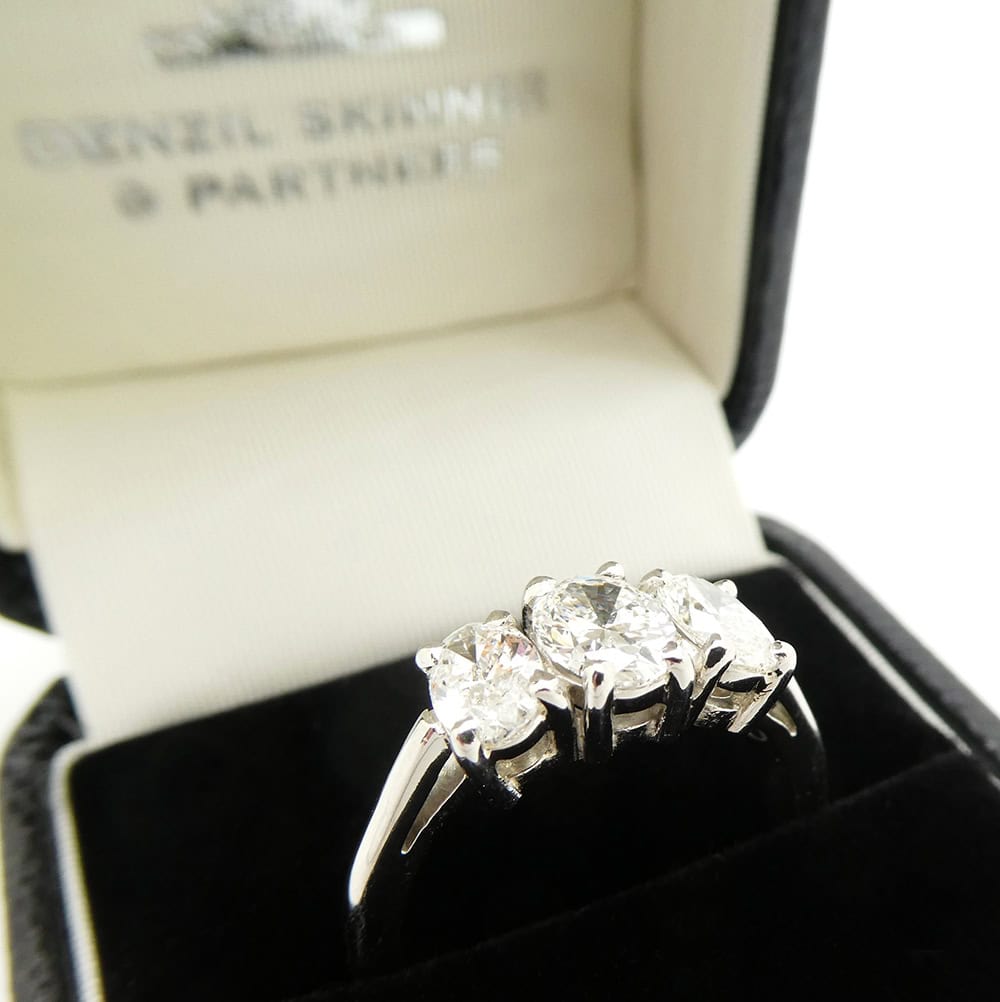
The 3 stone diamond is a favourite design, whether set with round, oval, square or pear shaped stones.
The diamond single stone engagement ring
A single diamond or with supporting stones.
Sapphire & diamond rings
The combined sapphire & diamond has always appealed.
Our guide to diamonds
The 4 C’s explained
Cut
The cut (shape) of a diamond is dictated by the shape and size of the ‘rough’ stone. Cutting diamonds used to be completed by hand but today most stones are cut by machine lasers that ensure the cut facets have maximum light refraction making the stone as sparkly as possible.
There are a great number of shapes but the most usual include round, oval, cushion, emerald cut, pear, princess (square), asscher, marquise and baguette.
Old Cuts
When using diamonds taken from antique jewels the stones are often described as ‘old cuts.’ These stones are quite unique and have their own personality. Historically, Antwerp was the centre for diamond cutting and polishing. The cuts include old round, rose, eight and mine cuts.
Clarity
The clarity of the stone is a measure of the purity of the stone; the fewer the imperfections within the stone the rarer it is which will reflect in the pricing.
Colour
Diamonds are graded using letters of the alphabet, D being the best white colour quality and descending as the white colour does.
Of course there are diamonds which are not white; yellow and pink being the most usual. However, there are natural blue, green and red examples which tend to be very rare and command high prices and could be described as ‘investment’ stones.
Carat
The weight of a diamond is described in ‘carats’.
Larger natural diamonds are often independently assessed and ‘certificated’. Examples of laboratories include GIA, IGI and HRD.
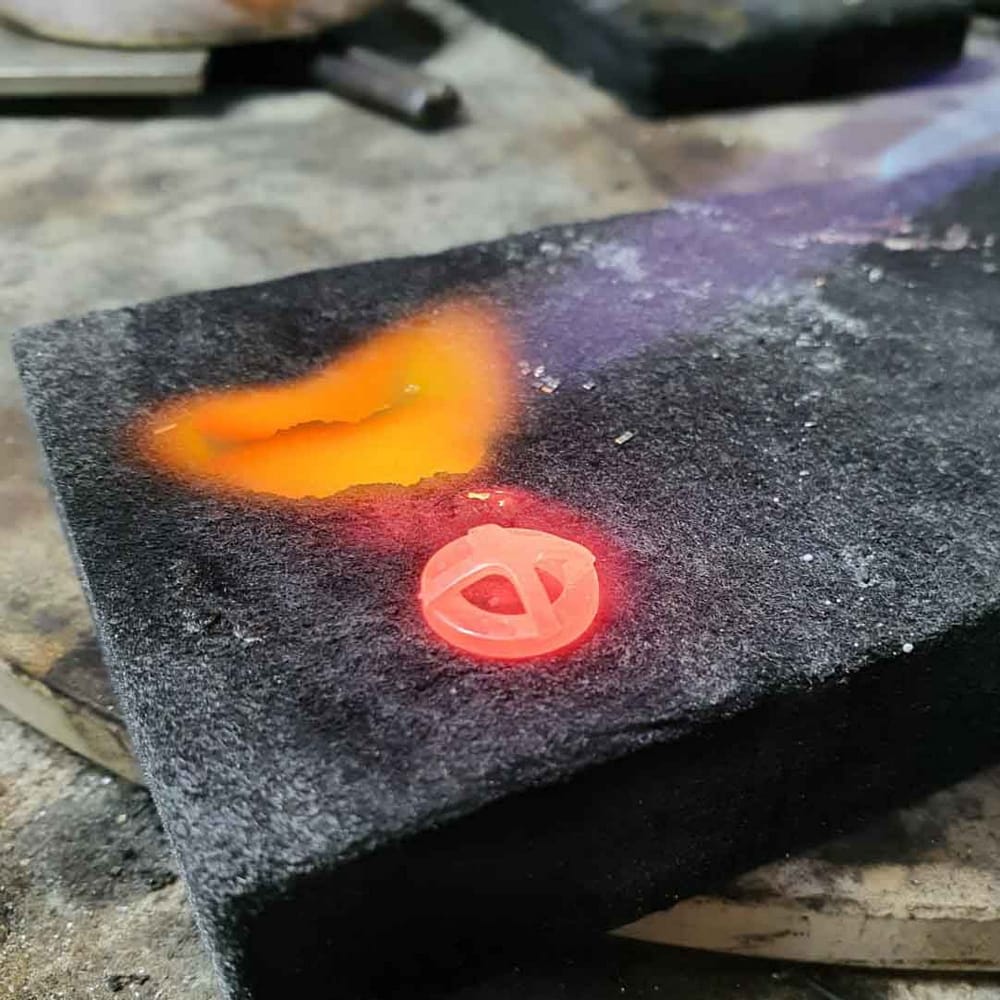
The design and creation of a unique bespoke engagement ring.
Working with our talented mounter, setter and polisher, this is a visual process of what goes into the design and crafting of a bespoke engagement ring.
Natural and laboratory grown diamonds explained
Up until a few years ago diamond set jewellery was mounted with natural diamonds. These stones were created deep within the earth’s crust and are mined or found in riverbeds and beaches. The value of these stones has been established for hundreds of years and is affected by a combination of the 4 C’s. The market is well established and understood for both new and second hand antique diamonds and essentially a natural diamond retains value.
Recently the technique to manufacture diamonds has been refined and ‘laboratory grown’ diamonds are now widely available in all shapes and sizes and look the same for a fraction of the price attributed to the equivalent natural diamond. These stones are chemically the same as natural diamonds and as they are laboratory manufactured there is no limit to their supply.
We offer advice and source both natural and laboratory grown diamonds to fit the design and budget.